
Composites innovants et revêtements industriels
Réparer Protéger Améliorer
Case Study:
Secondary Containment Chemical Bund Lining.
Secondary Containment Chemical Bund Lining for a UK Water Processing Facility.
Application: Secondary Containment Chemical Bund Lining.
Products: Resimac 503 SPEP & 501 CRSG.
Delivering Long-Term Chemical Protection for Critical Infrastructure.
Secondary containment systems play a vital role in protecting the environment from hazardous chemical leaks and spills. At a newly constructed water processing facility in the United Kingdom, a reinforced concrete chemical bund required a durable protective lining before the site could be commissioned, moreover, the coating system needed to deliver exceptional chemical resistance, long-term durability and ensure full compliance with strict UK environmental regulations.


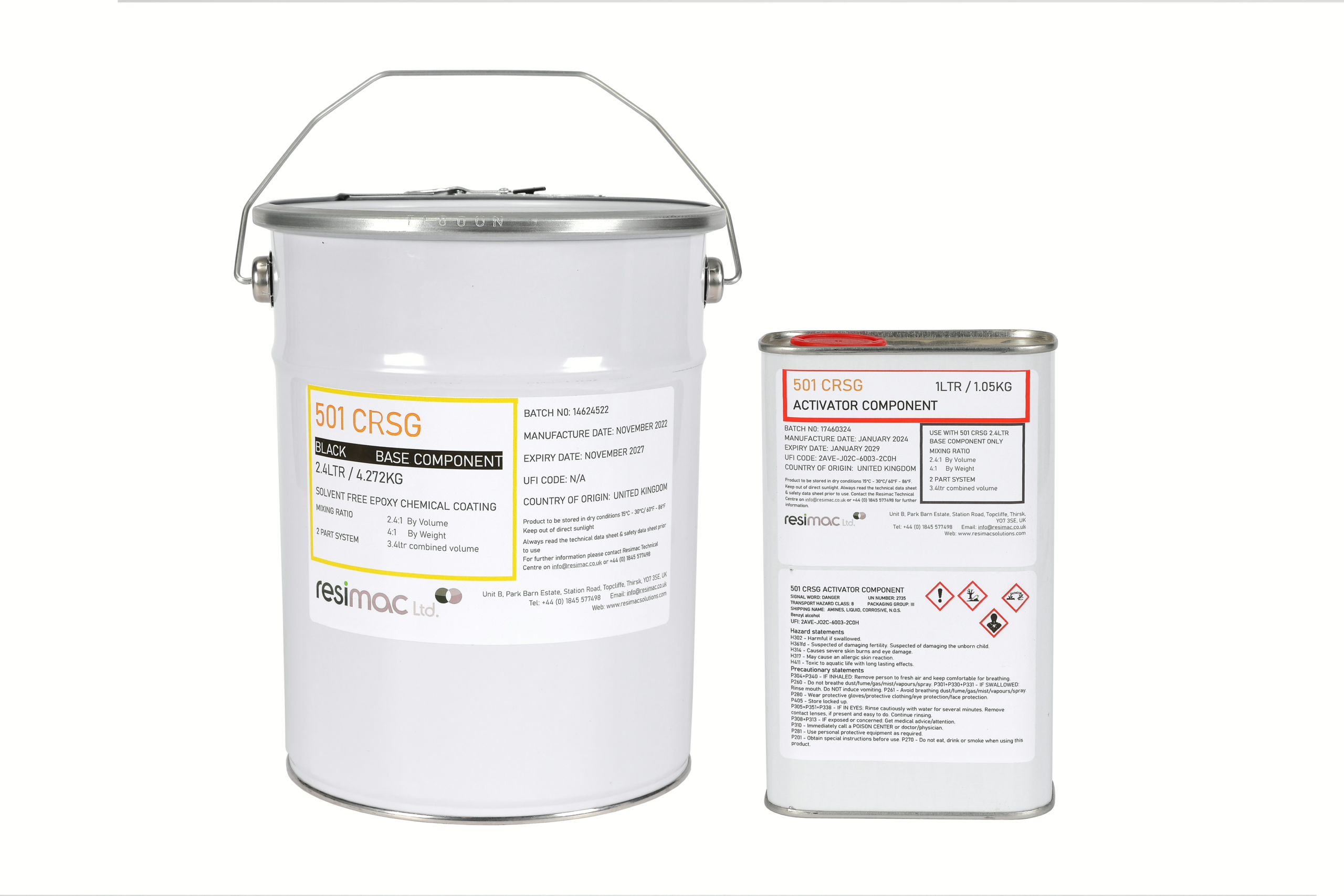


Secondary Containment Chemical Bund Lining for a UK Water Processing Facility.
Application: Secondary Containment Chemical Bund Lining.
Products: Resimac 503 SPEP & 501 CRSG.
The Challenge:
The facility's newly constructed secondary containment bund was designed to capture and contain any accidental chemical spills, thereby preventing contamination of the surrounding environment. Before the containment system could be brought into service, the concrete substrate required a high-performance lining capable of withstanding aggressive chemical exposure while providing a seamless, impermeable barrier for many years.
The Solution:
To achieve optimum coating performance, the new concrete was allowed to cure for 30 days until the moisture content met the required specification. The substrate was then primed with Resimac 503 SPEP, a solvent-free penetrating epoxy primer specifically developed to seal porous concrete and cementitious surfaces while creating an exceptionally strong bond for subsequent coatings. Its low-viscosity formulation penetrates deep into the concrete, consolidating the substrate and significantly improving adhesion, even on newly laid concrete.
Once the primer had cured, two coats of Resimac 501 CRSG were applied to create a high-build, solvent-free epoxy lining. Designed for long-term corrosion and chemical protection, 501 CRSG provides outstanding resistance to chemical attack while delivering a durable barrier that protects both concrete and steel structures. Its surface-tolerant formulation also allows application in demanding industrial environments, making it an ideal solution for chemical bund linings and secondary containment systems.
Products Used: Resimac 503 SPEP Penetrating Epoxy Primer.
Resimac 503 SPEP is a two-component, solvent-free epoxy penetrating primer developed for newly laid, porous and cementitious concrete surfaces. The low-viscosity formulation penetrates deeply into the substrate, sealing the surface, strengthening weak concrete and ensuring excellent mechanical adhesion for Resimac's chemical and corrosion-resistant coating systems. Suitable for application by brush, roller or spray, it also cures at temperatures as low as 5°C, making it suitable for a wide range of industrial environments.
Resimac 501 CRSG Chemical & Corrosion Resistant Coating:
Resimac 501 CRSG is a high-build, two-component, solvent-free epoxy coating engineered to provide long-term corrosion resistance and chemical protection for concrete and steel assets. The coating delivers exceptional durability in secondary containment areas, bund linings, process equipment and chemical storage facilities. Its surface-tolerant properties allow it to perform reliably on mechanically prepared substrates while providing long-lasting protection against aggressive chemicals, corrosion and harsh operating conditions.
What are the results & benefits of Resimac 501 CRSG?
The completed coating system provided the facility with a robust secondary containment solution capable of protecting both the structure and the surrounding environment for years to come.
What are the key benefits of Resimac 501 CRSG include:
Protects the surrounding environment from hazardous chemical spillages.
Extends the service life of secondary containment systems by 10 years or more.
Helps facilities comply with stringent environmental regulations.
Provides long-term resistance against chemical attack.
Reduces ongoing maintenance and repair costs.
Fast and straightforward application minimises installation time and project downtime.
By combining the deep-penetrating adhesion of 503 SPEP with the proven chemical resistance of 501 CRSG, the water processing facility received a complete protective lining system that delivers reliable, long-term performance in one of the industry's most demanding applications.
Contactez Resimac SA dès maintenant.
Engineered Polymer Solutions Cape Town, Afrique.
Téléphone : 083 261 0145


Why Chemical Bund Linings Are Important?
A properly specified chemical bund lining provides several critical benefits:
Prevents hazardous chemicals from contaminating soil and groundwater and protects concrete from chemical attack and deterioration.
It helps facilities comply with environmental regulations and containment standards.
Extends the service life of secondary containment structures while at the same time it reduces maintenance and repair costs, additionally it improves workplace and environmental safety.
Provides long-term resistance to aggressive chemicals and spill events.
These systems are particularly important in industries where even a small chemical leak could result in significant environmental damage, costly clean-up operations or regulatory penalties. High-performance epoxy systems, such as Resimac 503 SPEP used as a penetrating primer and Resimac 501 CRSG as the chemical-resistant topcoat, are commonly specified for these demanding secondary containment applications because they create a seamless, impermeable barrier with excellent long-term chemical resistance.
Common applications and examples of Secondary Containment Chemical Bund Linings:
Chemical Storage Tank Bunds: Concrete bunds surrounding chemical storage tanks are lined with chemical-resistant coatings to contain leaks or catastrophic tank failures.
Water & Wastewater Treatment Plants: Secondary containment areas around dosing systems, chemical storage tanks and process equipment handling chlorine, sodium hypochlorite, ferric chloride, sulphuric acid, caustic soda and other treatment chemicals.
Oil & Gas Facilities: Bunded areas around fuel tanks, diesel storage, lubricants and process chemicals to prevent hydrocarbon contamination.
Mining & Mineral Processing Plants: Containment structures protecting against spills from acids, cyanide solutions, flotation chemicals and other processing reagents.
Power Generation Facilities: Bunds surrounding transformers, fuel storage tanks and chemical dosing equipment used in boiler water treatment.
Pharmaceutical Manufacturing Plants: Secondary containment for solvents, acids, alkalis and specialty chemicals used during production.
Food & Beverage Processing Facilities: Bunds protecting chemical storage areas for cleaning chemicals, CIP (Clean-in-Place) systems and water treatment chemicals.
Petrochemical & Refinery Sites: Large containment bunds around storage tanks containing aggressive chemicals, fuels and hydrocarbons.
Manufacturing & Industrial Plants: Bunded areas around process vessels, mixing tanks and chemical transfer stations.
Bulk Chemical Storage Terminals: Secondary containment systems designed to contain leaks from large-volume storage tanks during storage and transfer operations.
Loading & Unloading Areas: Chemical transfer bays where spills can occur during tanker filling or unloading operations.
Battery Manufacturing Facilities: Containment areas designed to withstand exposure to sulphuric acid and other corrosive chemicals.
Agricultural Chemical Storage: Bunds protecting pesticide, herbicide and fertiliser storage facilities from accidental releases.
Marine & Port Facilities: Secondary containment around fuel storage, chemical storage and transfer infrastructure at ports and harbours.
Partner with Resimac SA.
With extensive experience and a focus on innovation, Resimac SA is your trusted partner in the power generation industry. Our advanced coatings are designed to protect your assets, enhance efficiency, and reduce operational costs.


