
Composites innovants et revêtements industriels
Réparer Protéger Améliorer
Case Study:
Leak Sealing and Pipe Repair Systems.
Leak Sealing and Pipe Repair Systems: A Modern Solution for Industrial Reliability.
In industrial environments, pipeline integrity is not just a maintenance concern, it’s a critical factor that directly impacts safety, productivity and operational costs. From water treatment facilities to oil and gas operations, even the smallest leak can escalate into significant downtime, environmental and health hazards all leading to expensive repairs.
This is where Resimac advanced leak sealing and pipe repair systems come into play. Designed for rapid response and long-term durability, these Resimac systems offer a practical, cost-effective alternative to traditional pipe replacement.
Understanding the Challenges of Pipe Damage?
Pipes are constantly exposed to harsh operating conditions like corrosion, chemical exposure, pressure fluctuations and mechanical stresses. Over time, these factors can lead to:
Cracks and fractures.
Corrosion-related thinning.
Joint and flange leaks.
Pinholes and perforations.
Traditional repair methods often require shutting down operations, cutting out the damaged sections and replacing them, a downtime approach that is both time-consuming and expensive.
Modern repair systems eliminate many of these challenges by enabling in-situ repairs, meaning pipes can often be fixed without stopping operations fully.

The Evolution of Leak Sealing Technology.
Today’s pipe repair solutions combine advanced epoxy technologies, reinforcement materials and engineered wrapping systems to create strong, long-lasting repairs.
These systems generally fall into two categories:
- Emergency Leak Sealing Solutions.
These are designed for rapid response situations where immediate action is required to stop leaks and prevent further damage.
Key products include:
101 Metal Repair Paste: A two-component epoxy used to rebuild, resurface, and seal damaged areas.
103 Metal Repair Stick: A fast-curing epoxy putty ideal for emergency pipe and tank repairs.
104 Metal Repair Fluid XF: A rapid-curing fluid that performs even in water- or oil-contaminated environments.
105 Aqua Stick: A specialised underwater repair putty for submerged applications.
These materials are engineered to cure quickly, even in challenging conditions, making them ideal for emergency scenarios where time is critical.
- Permanent Pipe Repair Systems.
For long-term reliability, more robust systems are used to restore structural integrity and extend the lifespan of pipelines.
Core solutions include:
302 Epoxy Metal Repair Cement Paste: A surface-tolerant epoxy for rebuilding and reprofiling corroded pipes.
301 Epoxy Resin & Hardener Pipe Repair System: A high-performance composite wrapping system.
108 Composite Pipe Repair Tape: A water-activated bandage designed for high-pressure pipe repairs.
When applied correctly, these systems create a high-strength composite layer around the pipe, effectively reinforcing and protecting it against future damage.
What are the Key Components of a reliable Pipe Repair System?
A successful pipe repair system relies on the integration of several high-performance components:
Uses for Epoxy Repair Materials.
Two-component epoxy compounds form the foundation of most repair systems. Products such as the 101 Metal Repair Paste and 302 Epoxy Metal Repair Cement Paste are used to:
Fill cracks and surface defects.
Rebuild corroded areas.
Provide a strong bonding base for reinforcement materials.
These materials are designed to be surface-tolerant, ensuring reliable adhesion even in less-than-ideal conditions.
Reinforcement Wraps.
Reinforcement materials such as glass fibre tapes used with the 301 Epoxy Resin & Hardener Pipe Repair System provide the structural strength.
Key benefits of reinforcement wraps?
Increased pressure resistance.
Enhanced durability.
Even distribution of stress across the pipe surface.
Types of Repair Tapes and Bandages?
For rapid deployment, solutions like the 108 Composite Pipe Repair Tape offer a convenient and effective option.
Once activated with water, these tapes harden into a rigid shell that seals leaks and reinforces the pipe, making these Repair Tapes and Bandages ideal for: Remote locations.
Emergency repairs.
Hard-to-access infrastructure.
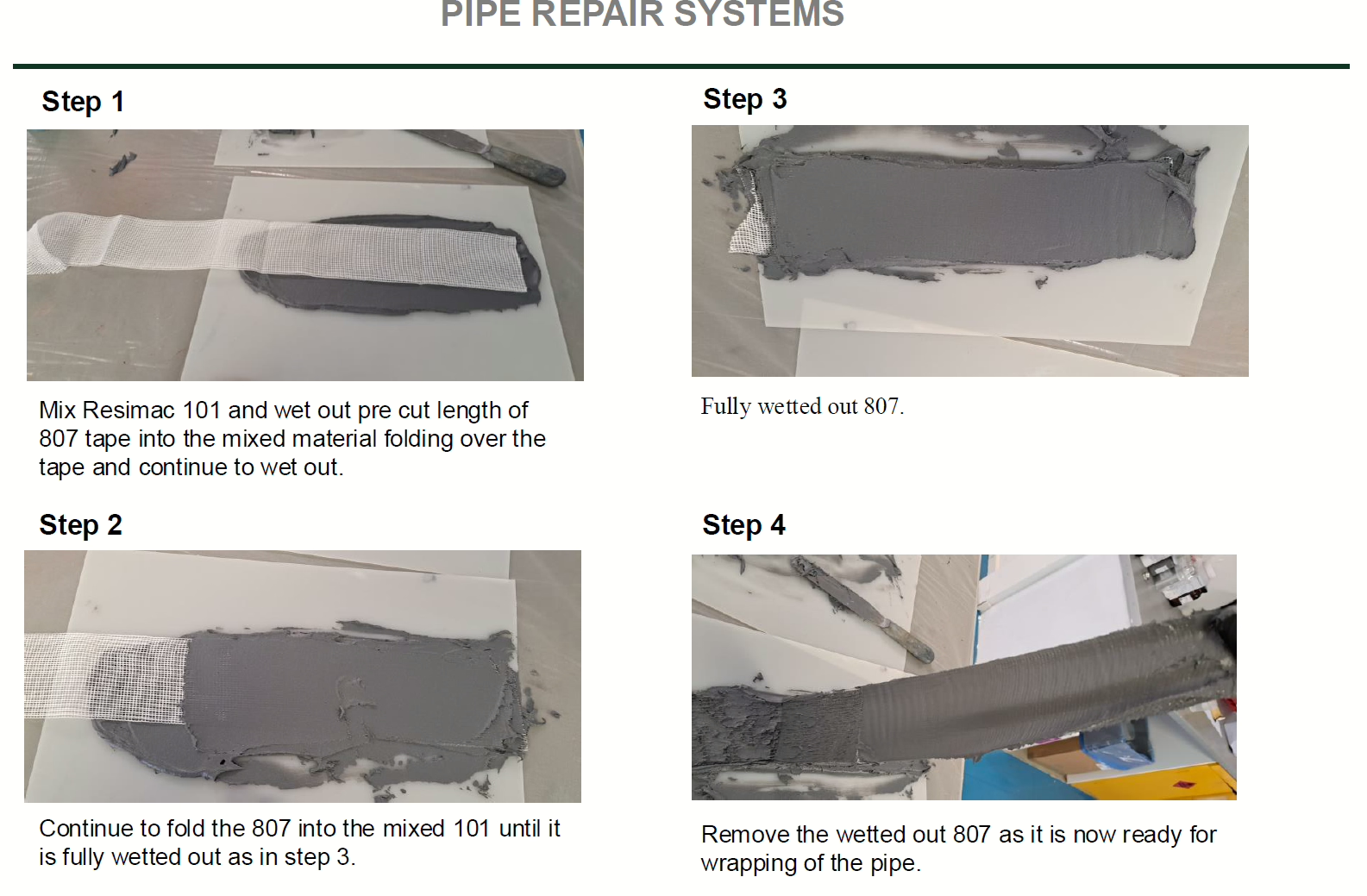
The Pipe Repair Process Step-by-Step.
While methods vary depending on the system used, most external pipe repairs follow a structured approach:
- Surface Preparation.
Proper preparation ensures strong adhesion and long-term performance. This typically involves:
Roughening the pipe surface.
Removing contaminants such as grease and corrosion.
Cleaning with a suitable solvent.
- Damage Stabilisation.
Before applying repair materials:
Cracks may be stabilised using stop holes.
Epoxy materials like the 101 Metal Repair Paste are used to fill and seal defects
- Application of Repair Materials.
Once prepared:
Epoxy is applied to the damaged area.
Reinforcement materials are saturated with resin.
The wrap is tightly applied around the pipe.
This ensures proper bonding and eliminates air pockets.
- Layering and Reinforcement.
Additional layers are applied to build strength:
Multiple wrap cycles may be required.
Overlapping ensures complete coverage.
Final smoothing enhances durability.
- Curing and Return to Service.
Modern repair systems are designed for efficiency:
Emergency products cure within minutes to hours.
Structural systems reach full strength within 24 hours or longer.
After curing, the pipeline can safely return to operation.
Performance and Pressure Resistance.
Modern pipe repair systems deliver impressive performance:
Repair tapes can handle moderate to high pressures.
Composite systems using products like the 301 Epoxy Resin & Hardener Pipe Repair System offer exceptional durability.
Advanced repairs can withstand pressures exceeding 100 bar. This makes them suitable for even the most demanding industrial applications. By extending the life of existing infrastructure, these systems also contribute to reduced waste and improved environmental outcomes.
Leak sealing and pipe repair systems have transformed industrial maintenance strategies. By combining speed, strength and versatility, they provide a powerful alternative to traditional repair methods. Whether you are addressing an emergency leak or reinforcing critical infrastructure, solutions such as the 101 Metal Repair Paste and 301 Epoxy Resin & Hardener Pipe Repair System deliver reliable, cost-effective results.
For organisations focused on reducing downtimes, improving safety and extending asset life, investing in advanced pipe repair technology is not just beneficial, it is essential.

The Advantages of the Resimac Leak Sealing and Pipe Repair Systems.
Reduced Downtime: Repairs can often be completed without shutting down operations.
Cost Efficiency: Avoiding pipe replacement reduces material, labour, and downtime costs.
Versatility: These systems can be applied to steel, cast iron, GRP, and other materials.
Safety and Environmental Protection: Fast leak sealing prevents hazardous spills and environmental damage.
Long-Term Reliability. Products like the 302 Epoxy Metal Repair Cement Paste ensure durable, long-lasting repairs.
Choosing the Right Leak Sealing and Pipe Repair System.
Selecting the correct solution depends on:
Type of damage (cracks, holes, corrosion).
Operating pressure and temperature.
Pipe size and material.
Accessibility of the repair area.
For example:
Small leaks may only require a 103 Metal Repair Stick.
High-pressure damage may require a combination of 108 Composite Pipe Repair Tape and epoxy systems
The Future of Pipe Repair.
As industries demand greater efficiency and sustainability, pipe repair technologies continue to evolve. Innovations in epoxy chemistry and composite materials are delivering stronger, faster, and more adaptable solutions.
Contactez Resimac SA dès maintenant.
Engineered Polymer Solutions Cape Town, Afrique.
Téléphone : 083 261 0145
Sustainability Through Durability.
Protecting assets is not just about cost control, it is also about reducing environmental waste. Each time a pump housing or pipeline is repaired rather than replaced, the carbon footprint of your operation decreases.
Resimac’s ceramic epoxy systems contribute to sustainable maintenance practices, reducing the frequency of component replacement and conserving valuable resources.
By extending asset life, you’re also extending environmental responsibility, proof that industrial performance and sustainability can coexist.
Partnering with Resimac SA.
With decades of expertise in polymer engineering, Resimac SA does not just supply coatings, we deliver complete solutions. From on-site evaluations to product selection and application guidance, our team works alongside engineers to ensure that every project achieves the best possible outcome.
We believe in protecting your assets, improving your efficiency, and building a more sustainable future. Ceramic epoxy is not just a coating; it is investment in operational resilience. By combining ceramic hardness with polymer flexibility, Resimac SA’s range of repair and protection systems delivers unmatched performance in abrasion, erosion and corrosion control.
When downtime isn’t an option, choose Resimac SA; your expert partner in industrial asset protection and repair.


