
Innovative Composites & Industrial Coatings
Repair Protect Upgrade
Resimac SA.
Corrosion Under Insulation Protection CUI.
Corrosion Under Insulation CUI poses serious risks to industrial infrastructure by allowing trapped moisture to degrade metal surfaces undetected. Resimac SA combats CUI with advanced epoxy & thermal barrier coatings offering high-temperature resistance, chemical durability & superior adhesion, even in damp conditions. CUI prevention coatings, outperform traditional insulation by reducing heat loss, resisting moisture absorption & preventing CUI related failures. By combining smart material selection, proper installation and proactive maintenance, Resimac provides a comprehensive solution to protect assets & lower costs.

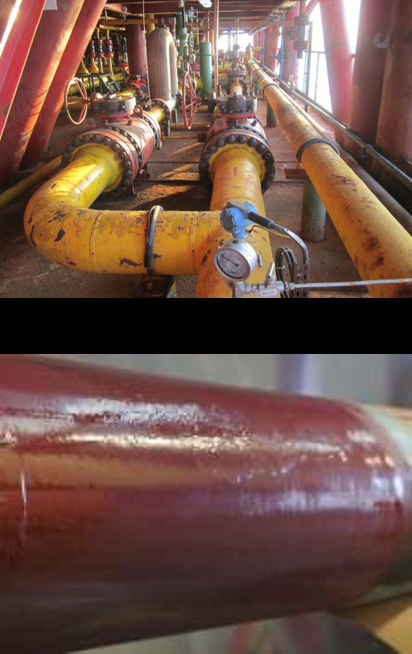
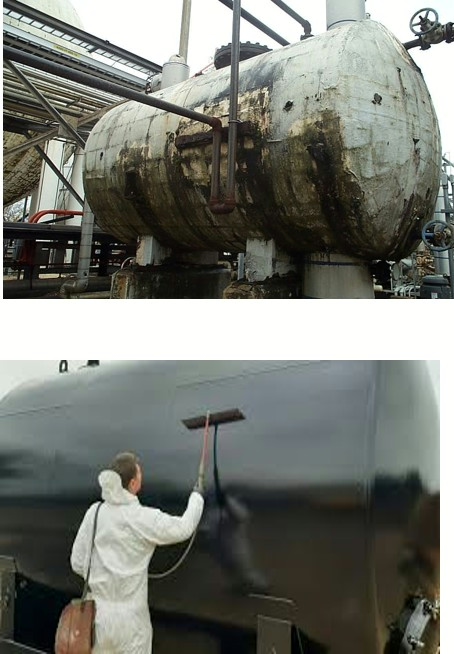
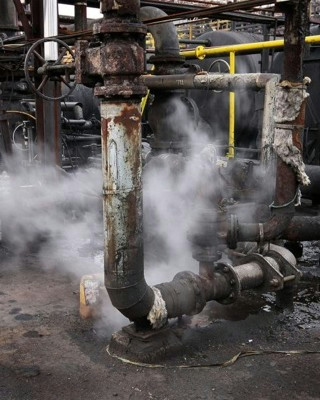
Corrosion Under Insulation (CUI) Protection with Resimac SA.
Corrosion Under Insulation CUI is a persistent threat in industries reliant on thermal insulation, for example, oil and gas, petrochemical, power, and processing plants alike. Corrosion quietly degrades metal beneath insulation, often going undetected until structural integrity is compromised. Resimac SA offers advanced material technologies to proactively combat CUI, extending asset lifespans and reducing operational risk.
Understanding CUI: Why It Matters?
CUI forms when moisture breaches insulation and comes into contact with a metal surface.
CUI thrives in conditions involving:
Poorly chosen or installed insulation (e.g., mineral wool, fiberglass).
Gaps at cut-outs, nozzles, valves or flanges.
Mechanical damage, maintenance mishaps and environmental exposure.
Materials with hygroscopic or chloride-laden content.
Temperature cycling causing condensation, even on hot systems.
This moisture-oxygen-metal trifecta accelerates corrosion, sometimes silently until catastrophic failure occurs.
Resimac’s Multi-Layered Approach to CUI Prevention.
- Engineered Coatings for Extreme Conditions.
Resimac SA specialises in epoxy and epoxy novolac coatings that:
Resist extreme temperatures up to 500°C (HeatSil 500).
Provide outstanding adhesion even on damp or imperfect surfaces.
Are solvent-free, reducing VOC emissions and improving on-site safety.
Offer chemical resistance for harsh industrial environments (HA100).
Thermally sprayed aluminium (TSA) and polymeric coatings also form integral parts of Resimac’s offering.
- Advanced Thermal Barrier Technology.
Low thermal conductivity coatings serve dual purposes: energy conservation and CUI protection. FEA modelling on insulated steel pipes showed:
5 mm of thermal barrier coating can reduce surface temperatures by 58.4°C, nearly halving heat loss.
15 mm of coating cut heat flux by 45.3%, reducing energy costs while eliminating CUI risks.
Crucially, these coatings outperform traditional Rockwool insulation, which loses thermal efficiency when wet, is a common CUI contributor.
What are the best Practices for Long-Term Corrosion Under Insulation CUI Protection?
Material Selection.
Use hydrophobic, water-repellent insulation and chloride-free materials.
Apply specialised coatings that maintain performance under thermal stress and moisture exposure.
Proper Installation and Sealing.
Minimise penetrations and seal all joints and terminations to avoid water ingress.
Elevate systems when possible, to prevent contact with standing water.
Routine Inspections.
Use non-destructive testing (NDT) such as infrared thermography or ultrasonic inspection to detect hidden corrosion.
Schedule inspections post-maintenance to verify insulation integrity.
Environmental Controls.
Maintain temperatures above the dew point and control humidity in enclosed spaces.
Ensure proper drainage in insulation systems.
Cathodic Protection.
Where applicable, integrate cathodic systems (e.g., sacrificial anodes) for additional protection.
Partnering with Resimac SA:
With decades of experience and material science innovation, Resimac offers: Tailored material recommendations based on environmental and operational demands.
On-site and in-factory application support.
Routine monitoring and maintenance assistance.
Customised Corrosion Under Insulation CUI prevention strategies with proven performance in demanding conditions.
Download our technical paper for a deeper dive into Corrosion Under Insulation CUI mechanics and coating performance:
Corrosion Under Insulation CUI Protection – Technical White Paper (PDF)
Conclusion.
Preventing CUI is not just about insulation, it’s about intelligent material selection, meticulous installation and resilient protective coatings. With Resimac SA’s solutions, industries can protect critical infrastructure, extend asset longevity and lower operational costs through a comprehensive and science-driven approach to CUI prevention.
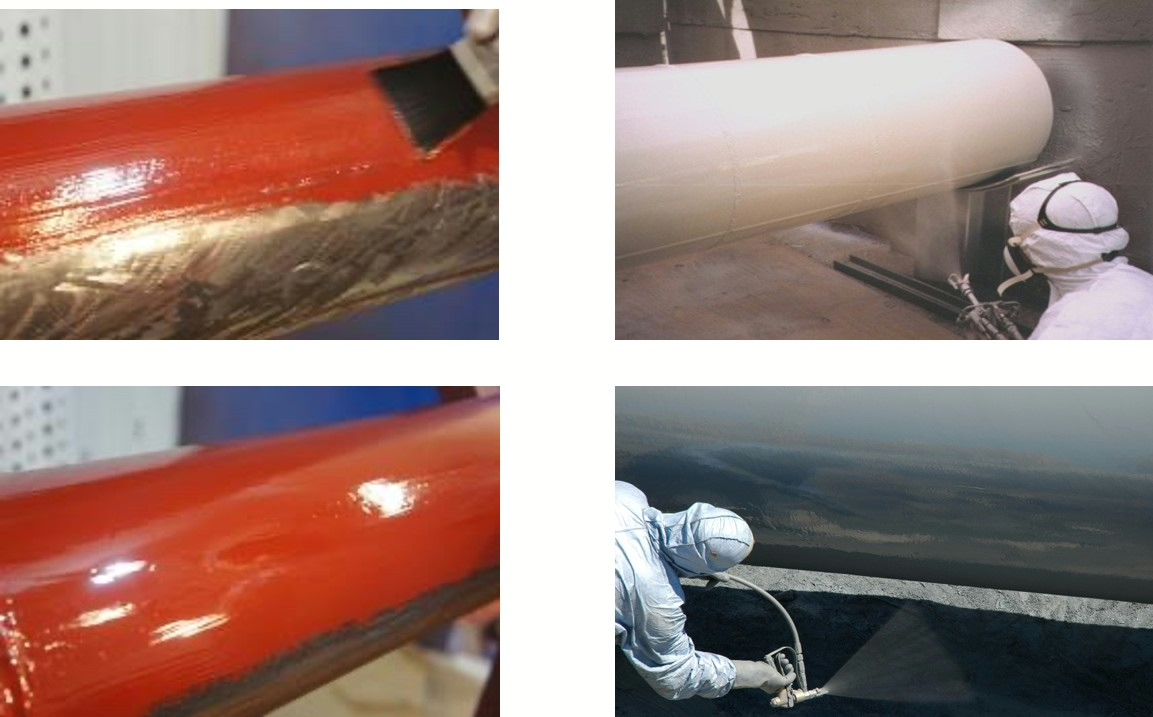
What are Prevention Strategies for Corrosion Under Insulation CUI?
1. Material Selection:
Use of Corrosion-Resistant Alloys: Choosing materials like stainless steel or other corrosion-resistant alloys can reduce the risk of CUI.
Coatings: Applying protective coatings to the metal surface before insulation is installed can help create a barrier against moisture. Epoxy and other specialised coatings are commonly used.
2. Insulation Selection and Design:
Water-Repellent Insulation: Use insulation materials that are less likely to absorb water, such as cellular glass, aerogels or closed-cell foam.
Proper Sealing: Ensure that insulation is properly sealed at all joints, seams and terminations to prevent moisture ingress.
Drainage: Design insulation systems with adequate drainage to allow any trapped water to escape.
3. Regular Inspection and Maintenance:
Inspection Techniques: Use non-destructive testing methods like ultrasonic testing, radiography, or infrared thermography to detect Corrosion Under Insulation CUI without removing insulation.
Scheduled Maintenance: Regularly inspect and maintain insulation and coating systems to identify and mitigate potential issues before they escalate.
4. Environmental Control:
Temperature Control: Maintain operating temperatures above the dew point to minimize condensation within the insulation.
Humidity Control: In environments where moisture is a concern, consider controlling humidity levels to reduce the risk of CUI.
5. Design Considerations:
Minimize Complexity: Design piping and equipment to minimize the number of insulation joints and penetrations, which are common entry points for moisture.
Elevated Structures: Where possible, elevate insulated equipment above ground to reduce exposure to standing water.
Advanced Techniques:
Real-Time Monitoring Systems: Implementing sensors and monitoring systems that provide real-time data on temperature, moisture levels, and corrosion rates can offer early warning signs of Corrosion Under Insulation CUI.
Innovative Coatings: Research into advanced coatings with self-healing properties or improved adhesion in wet conditions is ongoing and holds promise for better Corrosion Under Insulation CUI prevention.
Resimac Corrosion Protection Product Range. MSDS, TDS, Brochure, Application Instructions .PDF downloads.
Resimac SA Corrosion Protection Systems Guide
Resimac SA Corrosion Protection Coatings Range
Resimac SA Corrosion Protection Coatings Products
Resimac SA Metal Repair Systems Guide.
Abrasion, Wear & Impact Protection Products- Chemical Resistance Chart


